

Best Non Toxic Candles for Home: 2026 Buyer's Guide
Table of Contents
- Best Non Toxic Candles for Home: What Actually Matters in 2026
- Soy Wax vs Paraffin Candles: The Core Difference
- How to Tell If a Candle Is Non-Toxic: A Label-Reading Checklist
- Benefits of Soy Candles Beyond the Burn
- Indoor Air Quality: What Candle Smoke Does to Your Home
- Scent Throw vs Toxicity: The Trade-Off Nobody Explains
- Pet Safety and Candle Toxicity: What Cat and Dog Owners Should Know
- Recycling and Repurposing Candle Jars
- Frequently Asked Questions
Last Updated: October 2, 2026
Best Non Toxic Candles for Home: What Actually Matters in 2026
Walk down any candle aisle and you'll see the same words: clean, natural, eco-friendly. Few carry real weight. This guide from Pine Monte Premium Candles explains what actually makes best non toxic candles for home use, from wax to wick to fragrance source.
Non toxic candles are made without petroleum-based wax, lead-core wicks, or synthetic fragrance chemicals that release harmful compounds when burned. The distinction matters most in small, closed rooms.
Why the Candle Aisle Is Confusing
Most candle labels are written by marketing teams, not chemists. "Natural" has no legal definition in candle manufacturing, and "clean burning" appears on paraffin products too. The ingredient list on the bottom tells the real story, if a candle doesn't disclose its wax type, assume it's a paraffin blend.
Three things separate a genuinely clean candle from a greenwashed one:
- The wax base (soy, coconut, beeswax, or paraffin)
- The wick core (cotton and paper are safe; metal cores are not)
- The fragrance source (essential oils versus synthetic phthalates)
Soy Wax vs Paraffin Candles: The Core Difference
The soy wax vs paraffin candles debate comes down to origin. Paraffin is a petroleum byproduct; soy wax comes from soybean oil, a renewable plant source. That difference shapes how the candle burns and what it releases into your air.
What Paraffin Releases When It Burns
Paraffin wax is refined from crude oil. When it burns, it can release volatile organic compounds and fine soot particles. In a well-ventilated room that's minor; in a closed bedroom for hours, it adds up. That doesn't make every paraffin candle dangerous, it means ventilation is on you, and most people don't think about air circulation when they light a candle.
Where Soy Wax Wins and Where It Doesn't
Soy wax burns cooler and slower than paraffin, so less soot and a longer burn per ounce. It's also biodegradable and renewable. Where it falls short: pure soy has a softer scent throw than paraffin, especially unlit, which is why many makers blend it with coconut wax to boost cold and hot throw without petroleum.
How to Tell If a Candle Is Non-Toxic: A Label-Reading Checklist
Learning how to tell if a candle is non-toxic takes about 30 seconds. Flip the jar over and run through this list before you buy.
- Wax listed as 100% soy, coconut, beeswax, or a named plant blend
- Wick described as cotton, paper, or wood, never "metal core"
- Fragrance labeled phthalate-free or essential oil-infused
- No "fragrance" listed alone with no source disclosed
- Dye-free or naturally colored
- Made in small batches with a visible maker name
If a brand hides its wax type, that's your answer. Transparent makers put ingredients front and center because they have nothing to hide.
Benefits of Soy Candles Beyond the Burn
The benefits of soy candles extend past a cleaner flame. Soy wax is biodegradable, so leftover wax and jars break down more easily, and it comes from a renewable crop, lowering the carbon footprint versus petroleum-based wax. It also burns cooler, so the candle lasts longer per ounce, for nightly burners, that offsets the higher upfront cost. And a cleaner-burning candle means less soot on your walls and no lingering chemical smell after you blow it out.
Indoor Air Quality: What Candle Smoke Does to Your Home
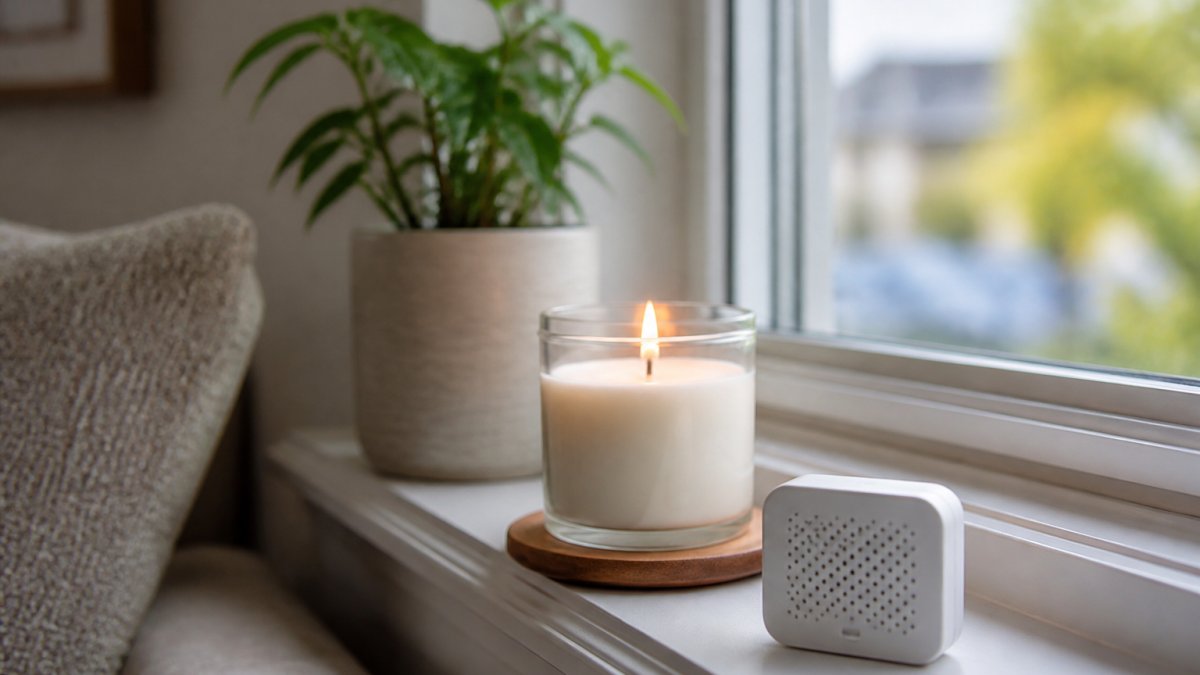
Indoor air quality is often two to five times worse than outdoor air, according to EPA research on indoor air quality. Candles are one small contributor, but in a sealed room they matter more than most people realize. What separates a data-backed conversation from a marketing one is naming what actually enters the air and how burn habits change the concentration.
What Candle Combustion Actually Releases
When any candle burns, the flame breaks wax and fragrance into combustion byproducts. The ones indoor air specialists watch most closely:
- Fine particulate matter (PM2.5): Particles small enough to reach deep into the lungs. Paraffin candles tend to produce more of these than plant-wax candles because of how the wax burns.
- Volatile organic compounds (VOCs): Carbon-based gases that off-gas from both the wax and the fragrance. Common ones associated with scented candles include formaldehyde, acetaldehyde, and toluene, though concentrations in a typical home are usually far below occupational exposure limits.
- Ultrafine particles: Even smaller than PM2.5, these are the fraction most associated with respiratory irritation in sensitive people.
- Soot (black carbon): The visible gray film on walls and ceilings near a frequently burned candle.
The key variable isn't just which candle you buy but how you burn it. A candle burned in a closed bedroom for four hours concentrates these byproducts far more than the same candle burned near an open window.
Soot, VOCs, and the Black Residue on Your Walls
That gray film near your ceiling isn't dust, it's soot from incomplete combustion, and paraffin candles produce more of it than plant waxes. VOCs behave similarly: released as the wax and fragrance burn, they linger in still air, so in a closed small room concentrations build up over an evening with no dilution.
The Burn Habits That Actually Reduce Exposure
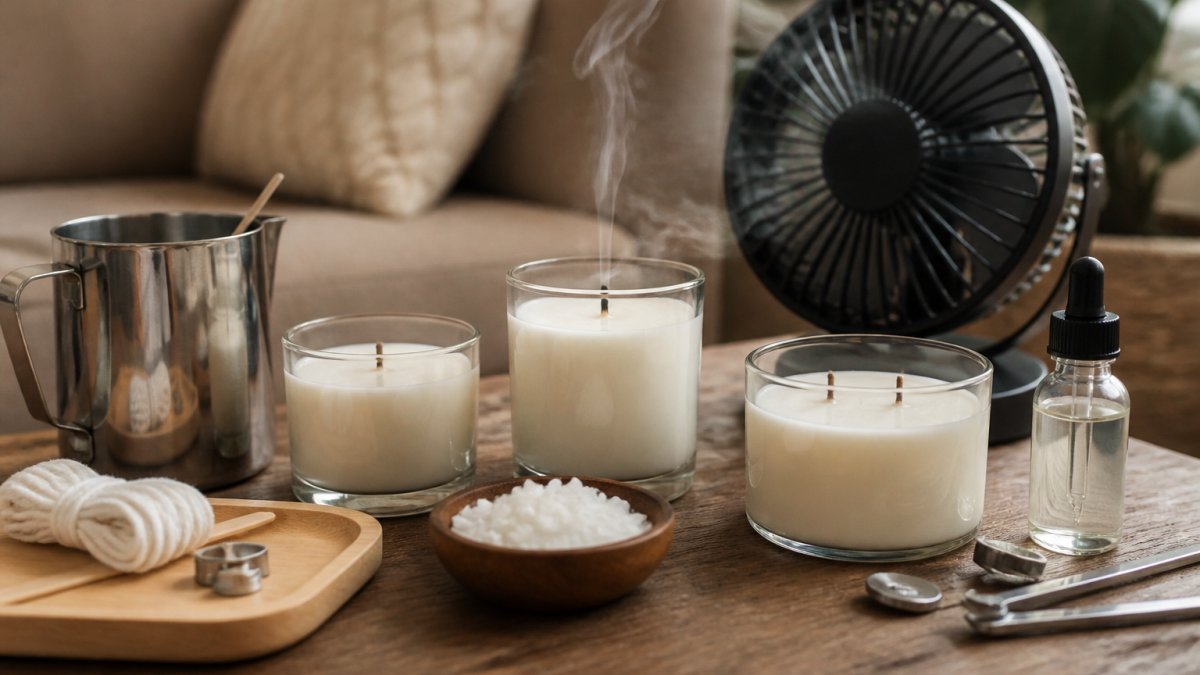
The fix isn't complicated and doesn't require replacing every candle. These habits cut soot and VOC buildup more than switching wax alone:
- Trim the wick to a quarter inch before every burn. A long wick is the single biggest driver of soot and incomplete combustion.
- Keep the candle out of drafts and away from vents. Drafts cause flickering and uneven burning, which increases soot.
- Cap burn sessions at about four hours. After that, the wax pool gets too deep and the fragrance load starts to overheat.
- Crack a window or run a range hood or exhaust fan. Dilution is the simplest and most effective control.
- Skip candles in small, sealed rooms with no airflow. A bathroom with the door closed is the worst-case scenario.
- Choose unscented or lightly scented candles for daily use. Fragrance is a major source of VOC emissions, so reducing fragrance load reduces the overall load.
The Unique Angle: Treat Candles Like Any Other Indoor Combustion Source
Most candle guides treat air quality as a candle-specific problem. A more useful frame: treat a candle like a gas stove, fireplace, or space heater, a small combustion source, managed with ventilation, session length, and fuel choice. That's why the burn habits above matter more than the label on the jar. A well-made plant-wax candle burned badly in a sealed room can still degrade air quality; a paraffin candle burned near an open window for an hour is a minor contributor.
Scent Throw vs Toxicity: The Trade-Off Nobody Explains
Here's the tension most guides skip: the chemicals that make a candle smell strong are often the ones you're trying to avoid. Synthetic fragrance oils with phthalates deliver a powerful, room-filling scent cheaply; phthalate-free essential oil blends smell subtler and cost more to produce. So you can have a candle that perfumes an entire floor, or one that scents the room you're in without synthetic additives, very few do both.
Pet Safety and Candle Toxicity: What Cat and Dog Owners Should Know
Cats and dogs have faster metabolisms and smaller bodies, so airborne irritants affect them sooner. Synthetic fragrance chemicals and soot are the main concerns, and cats are especially sensitive because their livers process compounds differently. The more useful information is which specific ingredients to avoid, because 'essential oil' and 'natural' do not mean 'pet-safe.'
Why Cats Are More Vulnerable Than Dogs
Cats lack a key liver enzyme pathway (glucuronidation) that dogs and humans use to break down many plant compounds and essential oils, so a compound that's mildly irritating to a person can accumulate to toxic levels in a cat. Dogs are generally more tolerant, but small breeds and puppies are at higher risk.
Essential Oils Known to Be Toxic to Cats and Dogs
These essential oils are commonly cited by veterinary toxicologists as risky for cats and, in some cases, dogs:
- Tea tree (melaleuca), toxic to cats even in small amounts; can cause drooling, tremors, and weakness (Tea Tree Oil Is Toxic To Dogs).
- Eucalyptus, causes salivation, vomiting, and depression in cats.
- Peppermint and other mints, can cause vomiting and ataxia in cats and small dogs.
- Citrus oils (lemon, orange, lime, bergamot), dermal and respiratory irritation; toxic to cats.
- Pine, spruce, and fir, respiratory irritation and, in cats, more serious reactions.
- Cinnamon and clove, strong irritants; can cause mouth and throat burning if ingested.
- Wintergreen, contains methyl salicylate, which is toxic to cats and dogs.
- Ylang ylang, can cause vomiting and lethargy in cats.
- Anise, basil, and thyme, listed by veterinary sources as risky for cats.
A candle labeled 'essential oil only' can still contain any of these. If you share your home with a cat, the safest scented option is a lightly scented candle built on oils not on this list, or an unscented candle entirely.
Signs Your Pet Is Reacting to a Candle
Watch for these during and after a burn session:
- Coughing, sneezing, or wheezing
- Watery or red eyes
- Excessive drooling
- Vomiting or diarrhea
- Lethargy or unusual hiding
- Tremors, wobbliness, or difficulty walking (seek veterinary care immediately)
- A pet that suddenly avoids a room it used to enjoy
If you see any of these, extinguish the candle, ventilate, and move your pet to fresh air. For tremors, vomiting, or difficulty breathing, contact your veterinarian or a pet poison control hotline immediately.
Safer Choices for Pet Households
- Unscented beeswax is the safest scented-candle alternative because it has no added fragrance oils at all.
- Lightly scented soy or coconut wax with a short, disclosed ingredient list is the next best option.
- Avoid 'fragrance' listed alone, it can hide dozens of compounds, including phthalates and the oils above.
- Skip candles entirely in rooms where birds, reptiles, or small pocket pets live.
- Keep flames on high surfaces and never leave a burning candle unattended around a pet that could knock it over.
- Burn in ventilated rooms and keep sessions short when pets are present.
The Unique Angle: Pet-Safe Is a Separate Standard From Human-Safe
Most non-toxic candle guides evaluate safety for the buyer. Pet owners need a second filter, because compounds merely irritating to a human can be genuinely toxic to a cat or small dog. That's why the ingredient list matters more than the front label, and why unscented beeswax is the default for homes with cats, birds, or small pets.
Recycling and Repurposing Candle Jars
Most candle jars end up in the trash, which is a waste, glass jars are easy to clean and reuse once the wax is gone. Freeze the jar for a few hours, pop the leftover wax out with a butter knife, and wash with warm soapy water: you have a storage container, makeup brush holder, or planter for small herbs.
Frequently Asked Questions
What are the healthiest candles to burn in your home?
Candles made from plant-based waxes like soy, coconut, or beeswax with cotton or wood wicks and phthalate-free fragrance tend to be the cleanest choice. Paraffin-free candles produce less soot and fewer volatile organic compounds. Look for a full ingredient list, not just the word 'natural' on the front label. A non-toxic candle should name its wax, wick material, and fragrance source clearly so you can verify what you're breathing in.
What ingredients should I avoid in candles?
Avoid paraffin wax where possible, since it is petroleum-based and releases soot and volatile organic compounds when burned. Skip lead-core wicks, which are banned in the U.S. but still appear in some imported candles. Watch for synthetic fragrance blends that list phthalates or parabens, and be cautious of vague terms like 'fragrance oil' with no further detail. A short, specific ingredient list is a better sign than a long list of unverifiable claims.
Is soy wax better than paraffin for indoor air quality?
Soy wax burns at a lower temperature and typically produces less soot than paraffin, which means fewer particles settling on walls and furniture. Paraffin is petroleum-based and releases more volatile organic compounds during a burn. That said, soy wax is not automatically clean if the fragrance load contains phthalates or synthetic musks. The wax base matters, but the fragrance and wick matter just as much for how to tell if a candle is non-toxic.
Can I burn non-toxic candles around pets?
Most plant-based wax candles are safe to burn around cats and dogs when used in a ventilated room and kept out of reach. The bigger risk comes from fragrance oils, especially those containing essential oils like eucalyptus, tea tree, or citrus, which can irritate a pet's respiratory tract. Never leave a burning candle unattended near a pet, and if your animal shows coughing, sneezing, or drooling near a lit candle, put it out and air the room.
Choosing cleaner candles shouldn't mean sacrificing scent or ambiance. Pine Monte Premium Candles hand-pours small batches of high-quality soy wax in Katy, Texas, as a veteran-owned business built on real attention to detail. Every candle delivers a clean burn and a strong, lasting fragrance throw, so you can scent your home without the soot or synthetic shortcuts. Browse the collection and find the scent that fits your space.



Leave a comment
This site is protected by hCaptcha and the hCaptcha Privacy Policy and Terms of Service apply.