How to Increase Candle Scent Throw: 7 Proven Methods
Table of Contents
- Understanding Scent Throw and What Affects It
- Optimize Fragrance Load Percentage for Maximum Performance
- Select the Right Wick Size and Type
- Choose the Best Wax Type and Melt Point
- Allow Proper Candle Curing Time Before Burning
- How to Burn a Candle Properly for Best Scent Throw
- Control Environmental Factors That Impact Fragrance Dispersion
- Frequently Asked Questions
Last Updated: October 4, 2026
Understanding Scent Throw and What Affects It
Scent throw is how well a candle's fragrance spreads throughout a room when lit, and understanding how to increase candle scent throw is key to maximizing your candle's performance. It's the difference between a candle that fills your space with aroma and one that barely smells a few feet away. Scent throw depends on several factors working together, none alone determines success, but combined they transform a candle from disappointing to exceptional.
Cold throw is the fragrance you smell unlit; hot throw is what you get when burning. Most people prioritize hot throw since it fills the room, but cold throw indicates whether quality fragrance oil was used.
The main factors affecting scent throw are:
- Fragrance load percentage (how much fragrance oil is in the wax)
- Wick size and type
- Wax type and melt point
- Cure time before the first burn
- How you burn the candle
- Room size and air circulation
- Environmental temperature
Optimize Fragrance Load Percentage for Maximum Performance
The fragrance load percentage is how much fragrance oil you add to your wax, measured as a percentage of the total weight. This is the single biggest lever you control to increase candle scent throw.
Most candles use 6-10% fragrance load. At 6%, scent is mild; at 10%, it's strong. Beyond 10%, wax reaches saturation and extra fragrance pools or burns unevenly.
The sweet spot for soy wax is 8-9%, delivering strong scent throw while maintaining even fragrance release.
Mix fragrance into wax between 170°F and 185°F. Cooler wax won't absorb properly; too hot causes compounds to evaporate. Stir gently for 2 minutes to ensure even distribution.
Select the Right Wick Size and Type
The wick controls melt pool size and flame heat. Larger wicks create bigger melt pools and release more fragrance; smaller wicks produce less.
Wick size is measured by diameter or plies. Too small causes tunneling (center burns, edges stay solid); too large burns hot and fast, depleting fragrance quickly and creating smoke.
For a standard 3-inch candle, use 1/0 to 2/0 wick; wider or multi-wick candles need proportionally larger wicks.
Test wick choice by burning for 3-4 hours. The melt pool should reach the edge without smoking or soot, and the flame should be steady at 1/4-1/2 inch tall.
Choose the Best Wax Type and Melt Point
Soy wax (160-180°F melt point) holds fragrance well. Paraffin melts hotter and holds more oil but is petroleum-based. Blended wax balances performance and sustainability.
Lower melt points create wider melt pools faster, releasing more fragrance. Higher melt points take longer to melt but may hold fragrance more effectively.
Soy wax melts evenly and releases fragrance gradually for steady, consistent aroma. Paraffin burns faster with aggressive upfront release that fades sooner.
Pine Monte Premium Candles uses soy wax for clean burn, sustained fragrance throw, and less soot buildup.
Allow Proper Candle Curing Time Before Burning
Cure time is how long a candle sits after pouring before lighting. During curing, fragrance oil fully binds with wax. Burning too soon releases fragrance unevenly and weakly.
Most soy wax candles need 24-48 hours cure time. Rushing means fragrance hasn't fully set, so it burns off faster and spreads less effectively.
Keep candles in a cool, dark place between 60-75°F during curing. Warmer temps soften wax unevenly; cooler temps help proper setting and fragrance bonding.
Cedar Chest 3 Wick Soy Candle Classic Cedarwood Luxury Scented →
After curing, let the first burn reach the edges (2-4 hours). Blowing it out early creates tunneling and reduces future scent throw.
How to Burn a Candle Properly for Best Scent Throw
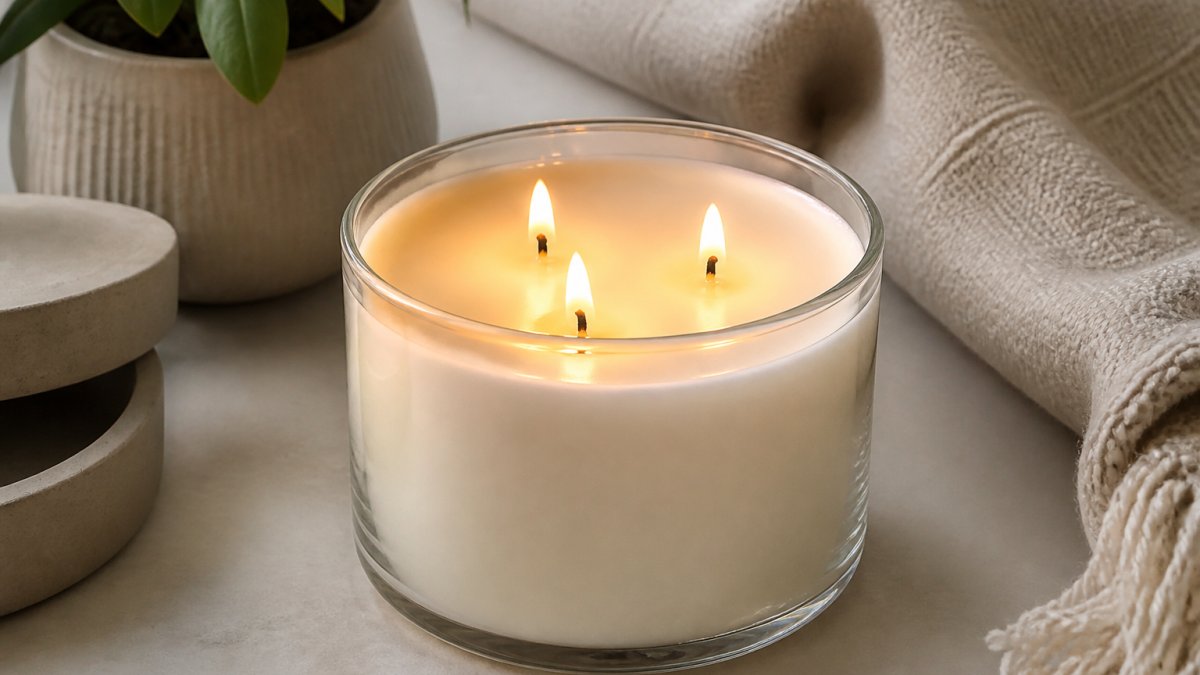
Trim your wick to 1/4 inch before each burn. A longer wick burns hotter and faster. It also creates more soot and carbon buildup. A trimmed wick produces a cleaner flame, better melt pool formation, and more consistent fragrance release. Keep wick trimmings out of the wax pool.
Let the melt pool reach the edges. On the first burn, allow the wax to melt completely across the top surface. This usually takes 2 to 4 hours for a standard candle. If you blow it out before the edges melt, you create a tunnel. Future burns won't melt the outer wax, and you'll lose scent throw.
Burn 3-4 hours at a time for fragrance to fully evaporate. Shorter burns don't reach optimal temperature; longer burns cause wick mushrooming and flame instability.
Let candles cool at least 2 hours between burns to prevent overheating and keep wicks stable.
Keep your candle away from drafts. Moving air disrupts the melt pool and scatters fragrance unevenly. Close windows and doors near your candle. Keep it away from fans, air conditioning vents, and open spaces.
Control Environmental Factors That Impact Fragrance Dispersion
Your room's conditions affect how far fragrance travels and how long it lasts. Temperature, humidity, air circulation, and room size all play roles in scent throw performance.
Warmer rooms help fragrance evaporate and spread; cold rooms slow release. Homes at 65°F or below may show weaker scent throw due to environmental conditions, not defects.
Gentle air circulation spreads fragrance; strong airflow disrupts it. Avoid vents, fans, and open windows that blow scent away.
Small bedrooms need one candle; large rooms need multiple or stronger fragrance load. Three-wick candles like Harbor Approaches work well in bigger spaces.

Dry air spreads fragrance easily; humid air suppresses it. In very humid homes, increase fragrance load slightly.
Ceiling height impacts scent distribution. High ceilings mean fragrance has to travel farther to fill the space. Lower ceilings help concentrate fragrance. In rooms with vaulted or cathedral ceilings, place candles on upper shelves or tables to help fragrance reach the full height of the room.
Increasing candle scent throw comes down to controlling the variables you can influence. Fragrance load, wick size, wax type, cure time, burning technique, and environmental awareness work together to maximize how much your candle fills your home with aroma.
Pine Monte Premium Candles hand-pours each candle with premium soy wax and carefully selected fragrance oils to deliver the strong, lasting scent throw you expect from a luxury candle. Our three-wick designs ensure consistent performance. Start with proper burning technique, allow adequate cure time, and pay attention to your room's conditions. These steps alone will transform how your candles perform. Shop our collection and experience the difference quality craftsmanship makes in scent throw.
| Factor | Impact on Scent Throw | How to Optimize |
|---|---|---|
| Fragrance Load | Controls overall fragrance intensity | Use 8-9% for maximum performance |
| Wick Size | Determines melt pool size and heat | Match wick to container diameter |
| Wax Type | Affects fragrance release rate | Choose soy wax for even dispersion |
| Cure Time | Allows fragrance to fully bond | Wait 24-48 hours before first burn |
| Burn Duration | Determines melt pool depth | Burn 3-4 hours per session |
| Room Temperature | Speeds or slows fragrance evaporation | Warmer rooms enhance scent throw |
| Air Circulation | Helps or hinders fragrance spread | Avoid direct drafts and vents |
Frequently Asked Questions
Why is my candle not throwing scent even though it smells strong in the store?
Store scent throw differs from home performance due to room size, air circulation, and olfactory adaptation. Your candle may lack sufficient fragrance load percentage, use an undersized wick that doesn't create a full melt pool, or be burned for too short a time. Cold throw (unlit fragrance) and hot throw (burning fragrance) are distinct. Most candles need 2-3 hours of burn time to establish proper scent dispersion. Check that your wick is trimmed to 1/4 inch and the melt pool reaches the container edges.
What fragrance load percentage should I aim for to increase candle scent throw?
Premium soy candles typically use 6-10% fragrance load by weight, with 8-10% delivering strong scent throw. Higher percentages can cause fragrance evaporation and binding issues. Start at 8% and test in your space before scaling. Fragrance oil quality matters. Allow proper cure time after pouring so the wax fully hardens and holds fragrance evenly.
How long should I let a candle cure before burning it?
Soy wax candles typically need 24-48 hours minimum cure time, though 7 days yields optimal results. During curing, the wax hardens completely and fragrance molecules bind throughout the structure, improving both hot throw and cold throw. Burning a candle before it's fully cured can result in weak scent dispersion, uneven melt pools, and tunneling. This is especially important for hand-poured luxury candles where quality burn performance justifies the wait.
Does room size really affect how strong my candle smells?
Yes. A single-wick candle in a large open space will have noticeably weaker scent throw than in a small bedroom. Larger rooms require either multi-wick candles or multiple candles to achieve the same fragrance intensity. Three-wick candles like the Cedar Chest 3 Wick Soy Candle are designed for larger rooms and open spaces because the multiple flames create a larger melt pool and faster fragrance evaporation. Closed rooms with lower air circulation also concentrate scent more effectively than spaces with ceiling fans or open windows.


Leave a comment
This site is protected by hCaptcha and the hCaptcha Privacy Policy and Terms of Service apply.