Non-Toxic Candles for Allergies: A Buyer's Guide
Table of Contents
- Understanding Non-Toxic Candles and Allergy Triggers
- Candles for Allergy Sufferers: What Makes Them Different
- Wax Types: Soy Candles for Allergies vs. Other Options
- Fragrance Choices: Essential Oils vs. Synthetic Fragrance
- Candle Ingredients to Avoid for Sensitive Homes
- Unscented Candles for Sensitive Homes and When to Choose Them
- Wick Materials and Burn Quality That Reduce Soot and Irritation
- How to Choose and Test Non-Toxic Candles for Your Home
- Frequently Asked Questions
Last Updated: October 21, 2026
Understanding Non-Toxic Candles and Allergy Triggers
Non toxic candles for allergies address a real problem: traditional candles release compounds that trigger respiratory irritation, headaches, and allergy symptoms. The issue isn't always the scent itself, it's often what's burning alongside it.
Most conventional candles use paraffin wax, a petroleum byproduct that releases volatile organic compounds (VOCs) when heated. Combined with synthetic fragrance chemicals and certain wick materials, these create an indoor air quality problem that can mean hours of congestion or watery eyes for anyone with asthma, allergies, or chemical sensitivities.
Non-toxic candles for allergies minimize irritants at every stage: cleaner-burning wax, purer fragrance sources, and less soot. Because individual reactions vary widely, understanding the specific components, wax type, fragrance source, and wick material, is essential for finding candles that work in your home.
At Pine Monte Premium Candles, we've focused on these exact details. Our hand-poured soy candles address the root causes of candle-related irritation rather than just marketing "natural" as a catchall solution.
Candles for Allergy Sufferers: What Makes Them Different
Candles for allergy sufferers differ from standard candles in three critical ways: the base wax, the fragrance delivery system, and the wick construction. Each component either reduces or amplifies irritation potential.
Standard candles prioritize burn time and scent throw at the expense of air quality. Paraffin wax is cheap and holds fragrance well, but when heated it releases benzene and toluene, chemicals linked to respiratory irritation.
Candles designed for allergy sufferers reverse these priorities. They use plant-based waxes that produce fewer emissions. They rely on essential oils or high-quality fragrance compounds that don't off-gas problematic chemicals. They use wicks that minimize soot, which is itself a respiratory irritant.
The practical difference shows up immediately. Many people report that switching to quality non-toxic candles for allergies eliminates the headaches or congestion they experienced with conventional options, and some find they can finally use scented candles again after years of avoiding them.
This isn't placebo. Burn a paraffin candle in a sealed room and air quality sensors detect increased particulate matter and VOC concentrations within minutes; plant-based alternatives produce significantly lower readings. For someone with asthma or severe allergies, that's the difference between comfort and symptoms.
Wax Types: Soy Candles for Allergies vs. Other Options
Soy Wax and Plant-Based Alternatives
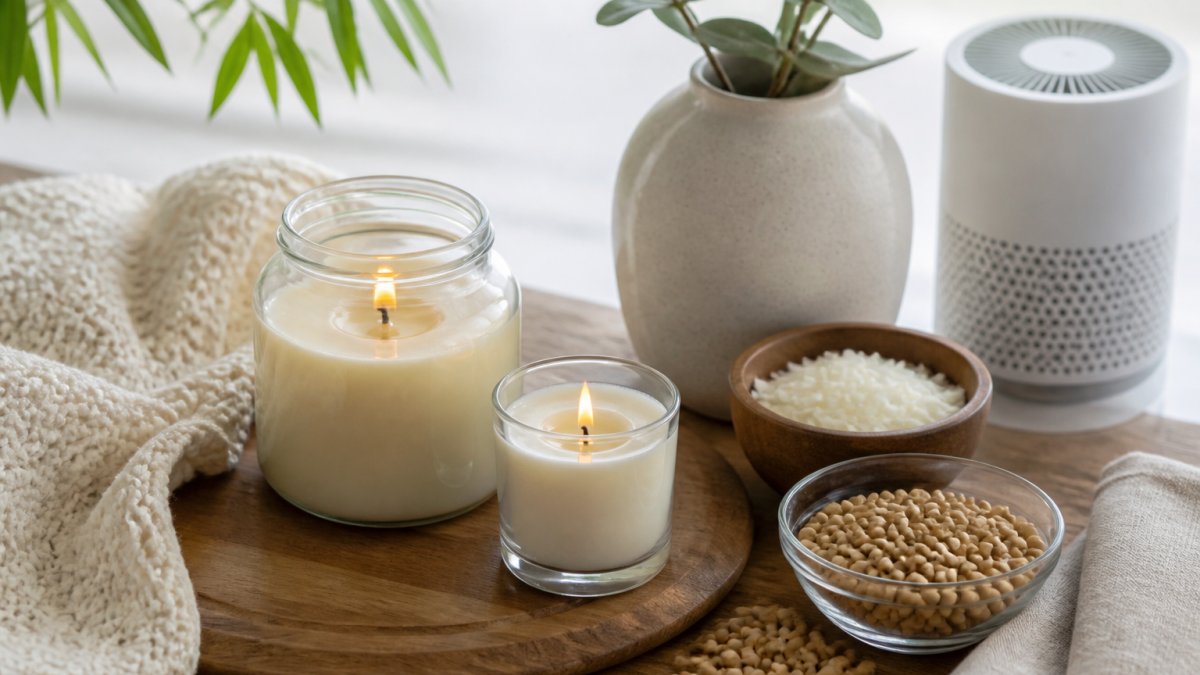
Soy wax has become the default choice for non-toxic candles for allergies, and for good reason. It's a renewable resource derived from soybean oil, it burns at a lower temperature than paraffin, and it produces minimal soot. When soy wax burns, it releases fewer VOCs and particulates into the air.
Soy wax also has a lower melting point, creating a larger melt pool that produces a more complete burn and longer fragrance throw, better scent performance without stronger synthetic fragrances to compensate.
Coconut wax is another strong option. It burns even cooler than soy and produces virtually no soot. Many premium candle makers blend coconut and soy wax to get the best properties of both: the sustainability and performance of soy with the clean-burn characteristics of coconut.
Beeswax is the oldest candle material and burns longer with a subtly sweet scent and no added fragrance. Some believe its negative ions purify air, though that claim lacks strong scientific backing.
Plant-based blends of soy, coconut, and other vegetable waxes offer customizable burn profiles, letting makers adjust scent throw, burn time, and soot reduction to the candle's intended use.
Why Paraffin and Blended Waxes Cause Problems
Paraffin wax is petroleum-derived, and burning it releases the same compounds you'd encounter near a highway or industrial area, an active irritant in an allergy sufferer's home. It also holds synthetic fragrance extremely well, meaning more fragrance chemicals released into the air.
Cheap blended waxes often mix small amounts of soy or coconut with paraffin to claim "natural" credentials while keeping costs low. These blends still release significant paraffin byproducts. They're marketing compromise, not genuine improvement. If an ingredient list shows paraffin anywhere near the top, it's not a candle for allergy sufferers, it's a conventional candle with a "natural" label.
Fragrance Choices: Essential Oils vs. Synthetic Fragrance
Essential oils sound like the obvious choice for non-toxic candles for allergies, but the reality is more nuanced.
The advantage of essential oils is transparency and control. A candle scented with lavender essential oil contains one ingredient: lavender. A candle scented with "lavender fragrance" might contain dozens of chemicals designed to mimic lavender while improving stability, throw, and performance.
High-quality synthetic fragrances aren't inherently harmful. Some derive from natural sources and are processed to remove problematic compounds; others are formulated to be stable and non-irritating. The key difference from cheap synthetic fragrance is purity and testing, premium suppliers screen compounds for allergens and respiratory irritants.
For candles for allergy sufferers, the choice between essential oils and synthetic fragrance matters less than the specific scent. Lavender essential oil works beautifully for most people. So does a high-quality synthetic lavender fragrance from a reputable supplier.
Unscented candles eliminate this variable entirely. If you're severely sensitive or still figuring out which scents trigger your symptoms, an unscented soy candle provides clean ambiance and light without fragrance risk.
Candle Ingredients to Avoid for Sensitive Homes
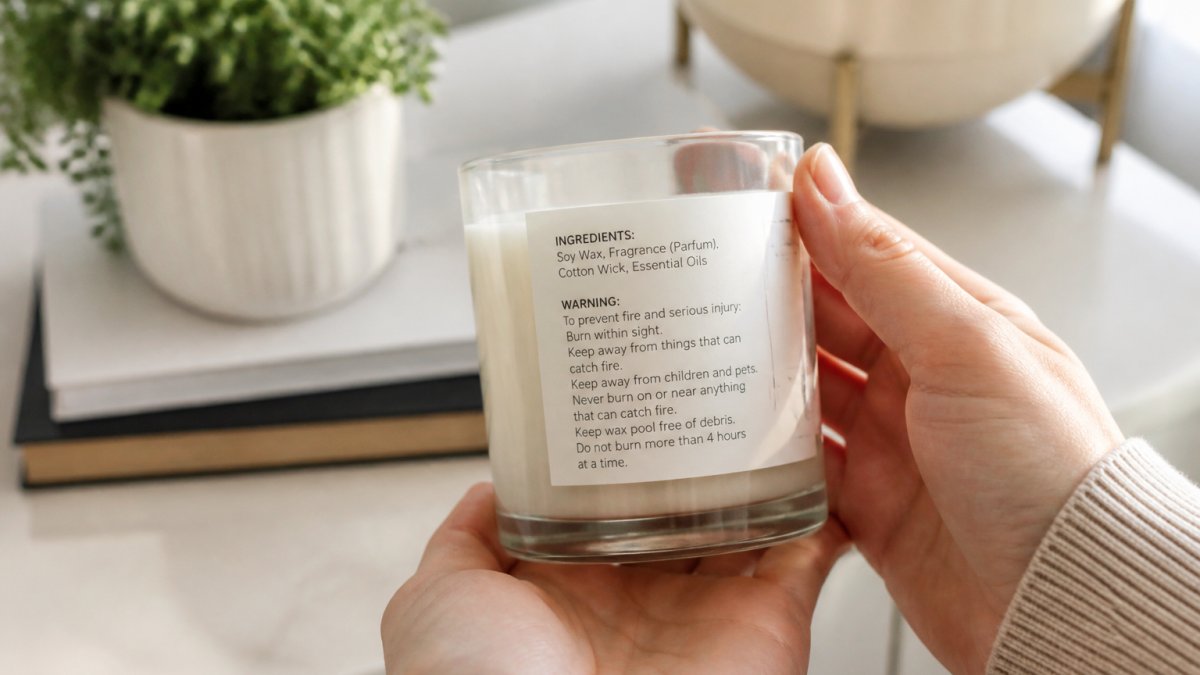
Read ingredient lists like you'd read food labels. If a candle doesn't disclose its ingredients, that's a red flag. Transparency matters because it tells you what's actually burning.
Paraffin wax releases benzene and toluene. Avoid it entirely for sensitive homes.
Lead-core wicks were banned in the U.S. in 2003, but some imported candles still contain them. Lead accumulates in the body and is particularly harmful to children.
Phthalates are chemicals added to synthetic fragrance to improve scent throw and longevity. They're endocrine disruptors linked to reproductive and developmental problems.
Formaldehyde appears in some candle fragrances as a preservative. It's a known respiratory irritant and carcinogen. Avoid any candle where formaldehyde is listed or suspected.
Artificial colorants like FD&C dyes can trigger reactions in people with dye sensitivities. Natural colorants or no added dye are safer choices.
Stearic acid in excessive amounts can create a waxy residue and increase soot production. A small amount is fine; large amounts suggest cost-cutting.
Zinc or tin stearates are sometimes added to improve fragrance throw but can increase particulate emissions. They're less common in quality candles.
Unscented Candles for Sensitive Homes and When to Choose Them
Unscented candles for sensitive homes provide the ambiance and soft light of a candle without fragrance variables. For people with severe chemical sensitivities, multiple fragrance allergies, or respiratory conditions like asthma, unscented is often the only option that doesn't trigger symptoms.
Unscented doesn't mean boring. Quality unscented soy candles have a natural cream color and burn beautifully, ideal for bedrooms, nurseries, or spaces where you want ambiance without olfactory input, and excellent for testing whether wax and wick or fragrance is the problem.
Choose unscented candles when:
- You have multiple fragrance allergies or severe chemical sensitivities
- You're recovering from a respiratory infection or asthma flare
- You're pregnant or nursing and avoiding aromatic compounds
- You want candles in a bedroom without sleep disruption
- You're introducing candles to a sensitive household for the first time
Even unscented candles aren't universally safe, some people react to the wax itself or to soot particles, but they eliminate one major variable. If an unscented soy candle with a cotton wick causes no reaction, you've identified that fragrance was the problem. Then you can experiment cautiously with specific scents.
Wick Materials and Burn Quality That Reduce Soot and Irritation
The wick is often overlooked but critical for clean burning. A poor wick produces excess soot, particulate matter that irritates lungs and accumulates on walls and ceilings.
Cotton wicks are the gold standard for non toxic candles for allergies. They burn clean, produce minimal soot, and don't release toxic byproducts.
Wood wicks are trendy and crackle pleasantly, but they're inconsistent, some burn too hot and produce excess soot, others unevenly. Test the specific candle before buying multiples.
Papier-mâché wicks are sometimes used in premium candles. They're similar to cotton in performance and produce minimal soot.
Zinc or tin-core wicks should be avoided. They're designed to increase fragrance throw but produce more soot and particulates.
Lead-core wicks are illegal in the U.S. for consumer candles, but remain a concern with imported products. Never buy candles with lead-core wicks.
Wick size matters too. Too thin and it won't burn the wax completely, leaving excess fragrance in the air; too thick and it burns hot, producing soot. Quality makers match wick size to wax type and fragrance load.
How to Choose and Test Non-Toxic Candles for Your Home
Start with wax type. If a candle uses paraffin or won't disclose its wax, skip it. Soy, coconut, beeswax, or plant-based blends are your safe options.
Check the fragrance source. Essential oils and high-quality synthetic fragrances are both acceptable. Cheap synthetic fragrance or undisclosed "fragrance" is a risk.
Verify the wick. Cotton or quality paper wicks are ideal. Avoid anything with lead or zinc cores.
Read the ingredient list. If it's not provided, ask the maker. Transparency is a sign of quality.
| Selection Criterion | What to Look For | Red Flag |
|---|---|---|
| Wax type | Soy, coconut, beeswax, plant blends | Paraffin, undisclosed wax |
| Fragrance | Essential oils or named synthetic fragrance | Generic "fragrance," phthalates |
| Wick | Cotton, paper, or quality wood | Lead-core, zinc-core, thick metal |
| Transparency | Full ingredient list provided | Vague descriptions, hidden ingredients |
| Burn characteristics | Minimal soot, even burn | Black residue, uneven melting |
Before committing to a full collection, buy a single candle and test it in the room where you'll use it most. Light it for 30 minutes and watch for:
- Does the scent trigger any symptoms (headache, congestion, irritation)?
- Is there visible soot on the container or nearby surfaces?
- Does the flame burn steadily or flicker and smoke?
- Does the scent throw feel appropriate or overwhelming?
Any negative reaction means the candle isn't right for your home, individual sensitivities vary too widely for any candle to be universally safe.
For severe allergies, consider starting with unscented candles to establish a baseline. Once you know an unscented option works, you can experiment with specific fragrances one at a time, waiting a few days between tests to identify any delayed reactions.
Pine Monte Premium Candles offers hand-poured soy options designed for this purpose. Our small-batch production controls every ingredient, and we use cotton wicks and high-quality fragrance from suppliers who prioritize allergen screening.
Choosing non-toxic candles for allergies means prioritizing clean-burning wax, transparent fragrance sourcing, and quality wick materials over marketing claims. According to the American Academy of Allergy, Asthma & Immunology, indoor air quality directly affects respiratory health, making your candle choice more consequential than most people realize.
Frequently Asked Questions
What makes non-toxic candles better for people with allergies?
Non-toxic candles use clean-burning waxes like soy and beeswax instead of paraffin, which releases fewer irritants when burned. They avoid synthetic fragrances and dyes that trigger allergic reactions. Lead-free cotton wicks prevent soot buildup that can irritate airways. For allergy sufferers, the combination of pure ingredients and proper wick materials significantly reduces respiratory irritation and indoor air quality problems.
Are soy candles for allergies always a safe choice?
Soy wax itself is hypoallergenic and burns cleaner than paraffin, making it an excellent choice for allergy sufferers. However, safety depends on the fragrance and additives used. Even natural soy candles can trigger reactions if they contain synthetic fragrance or dyes. Always check ingredient lists and choose soy candles with pure essential oils or unscented options. Individual reactions vary, so patch-test new candles in a small space before using them throughout your home.
Can unscented candles for sensitive homes help if I have fragrance sensitivity?
Yes. Unscented candles eliminate fragrance as a trigger entirely, making them ideal for sensitive homes where scent throws cause headaches or respiratory irritation. They still provide ambiance and warmth without chemical exposure. Unscented options with plant-based wax and cotton wicks offer all the benefits of clean-burning candles while removing the most common allergen. This makes them the safest choice for severe fragrance sensitivity or asthma.
What candle ingredients to avoid if I have allergies?
Avoid paraffin wax, which releases toxins and soot when burned. Skip candles with synthetic fragrance, phthalates, and artificial dyes, these are major allergy triggers. Stearic acid and lead-containing wicks can worsen respiratory sensitivity. Watch for vague ingredient labels; transparency matters. Choose candles that list specific wax type, wick material (cotton or wood), and fragrance source (essential oils or unscented). Reading the full ingredient list prevents purchasing candles that will trigger your symptoms.




Leave a comment
This site is protected by hCaptcha and the hCaptcha Privacy Policy and Terms of Service apply.